

Which toilet aid is right? Seat riser, arm lift or electric toilet lift
Sitting down on the toilet and standing up again is one of the most demanding movements of the day for many older people and patients. When it becomes difficult, the risk of falling rises – and so does the need for help from family or carers. The good news: there is a solution for almost every situation, from a simple seat riser to a fully electric toilet lift. This guide helps you find the right one.
1. Toilet seat riser – when the toilet is simply too low
A seat riser raises the sitting height so the knees and hips do not have to bend as far. It suits people who can still stand up on their own but find a low toilet uncomfortable, for example after a hip or knee operation. Our S04-06 plastic toilet seat riser has a rubberised underside and a splash rim, and it can be combined with an arm lift or an electric bidet.
2. Armrests and grab bars – when you need something to push against
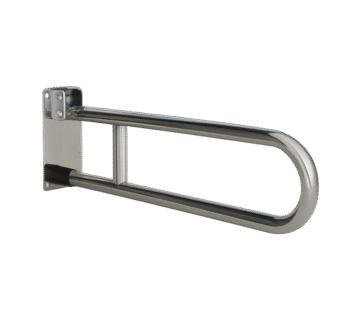
Many people can stand up if they have firm support on both sides. The TGH-01 arm lift is fixed to the toilet with two screws; its padded armrests fold up and have spring brakes. Wall-mounted stainless steel grab bars with a 32 mm tube – such as the FFK606-800 folding grab bar or the EK300-900 straight grab bar – give a secure grip beside the toilet and in the shower.
3. Standing aids – when leg strength is not enough
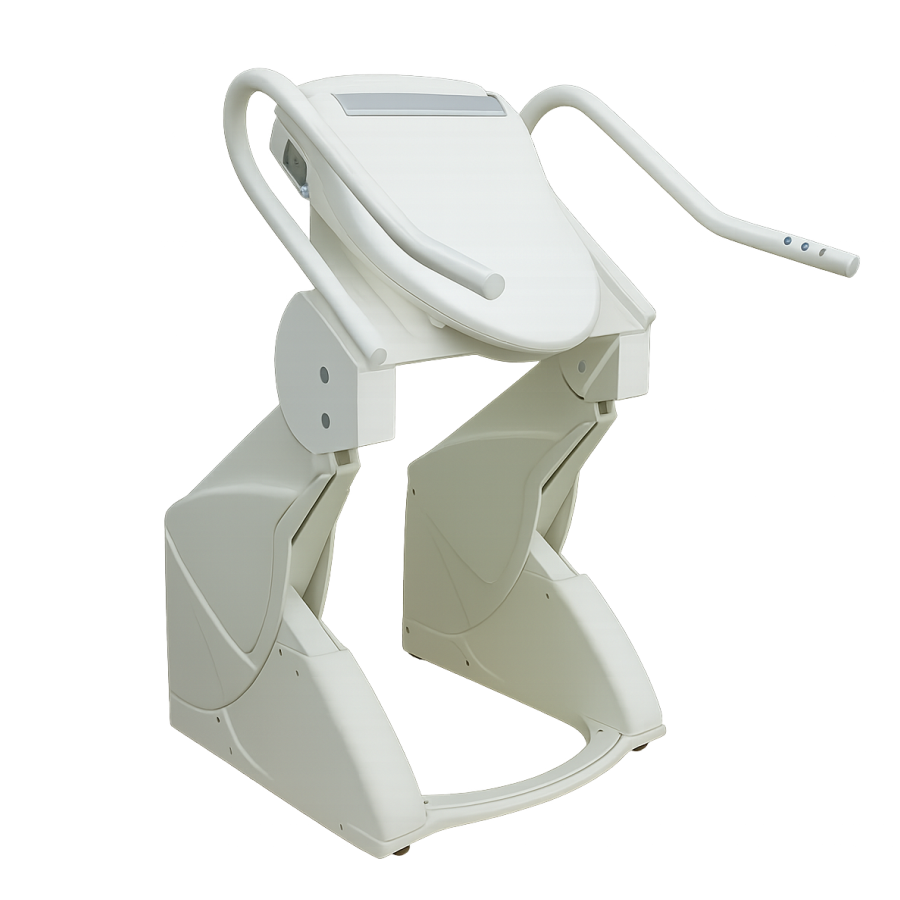
If the arms alone cannot provide enough lift, a motorised standing aid helps. The BC-70 stand-up assistance device needs no installation: place it over the toilet, plug it in and it is ready to use. The R2DFX standing assistance device is designed to be affordable for home use and is adjustable in almost every direction, so it fits most toilet bowls.
4. Electric toilet lift – for severe mobility limitations
For people who can hardly sit down or stand up at all – because of age, high body weight or illnesses such as muscular dystrophy – an electric toilet lift follows the natural movement of sitting and standing. The R2D2 toilet assistance device has the controls built into its handles, so the user never has to let go, and it moves only while the button is pressed. A heavy-duty version is available for users over 150 kg (up to 300 kg), and a vertical-lift version suits wheelchair users.
5. Built-in wall-mounted toilet lifts – for renovations and care homes
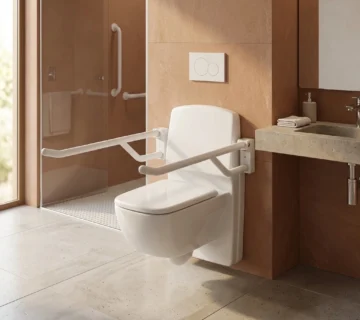
If the bathroom is being renovated or you are equipping a care facility, a lift built into the wall is the most elegant solution. The LIFT-WC STV200 is compact and available with bottom or back outlet; the LIFT-WC CARE has braked grab bars and a lift range of 400–750 mm; the CARE PLUS adds a bowl tilt from -1° to +10°; and the ForAll is operated by a wall switch.
How to choose: five questions
- Can the user stand up alone if the seat is higher? Start with a seat riser.
- Can they stand up when pushing with their arms? Armrests or grab bars are usually enough.
- Are the legs and arms too weak? Choose a motorised standing aid or an electric toilet lift.
- What is the user’s weight? Check the load capacity – heavy-duty versions exist.
- Is a renovation planned or is the toilet shared? A built-in wall lift may be the best long-term solution.
Every bathroom and every person is different. Ask a physiotherapist or doctor which support is needed, and send us your measurements – our engineers will recommend the right model. Request a free quote.
No comment